Guides
Haircut and Hair Color Decision Guides
Make a clearer haircut or color decision, prepare a useful AI preview, and communicate the result to a stylist or barber.
Explore on your photo
Choose a direction to preview
Each page explains the visual change, practical considerations, and what to discuss with a stylist or barber.
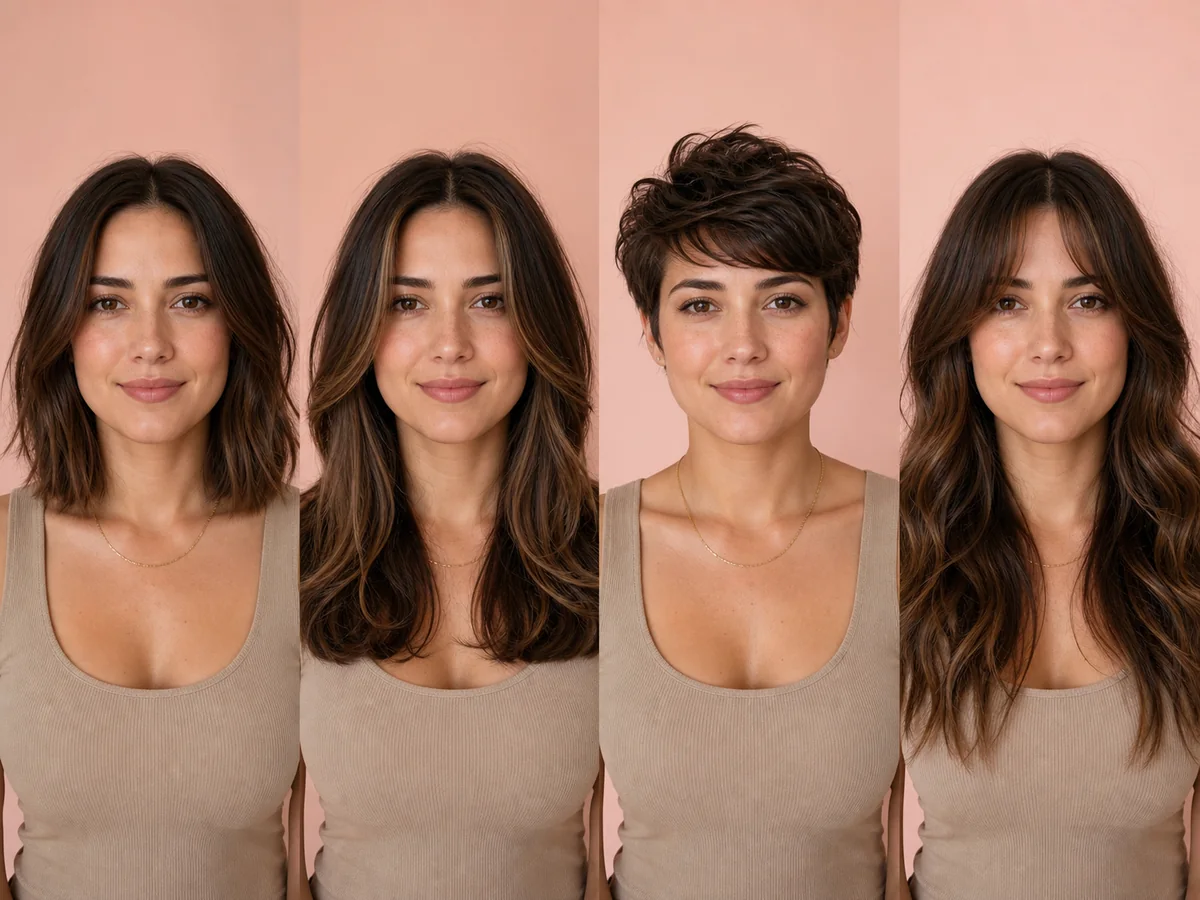
How to Choose a Hairstyle
A useful hairstyle decision balances how the cut looks with how it behaves in everyday life. Start with the silhouette you enjoy, then filter it through texture, growth patterns, maintenance, and professional advice.
Explore this look →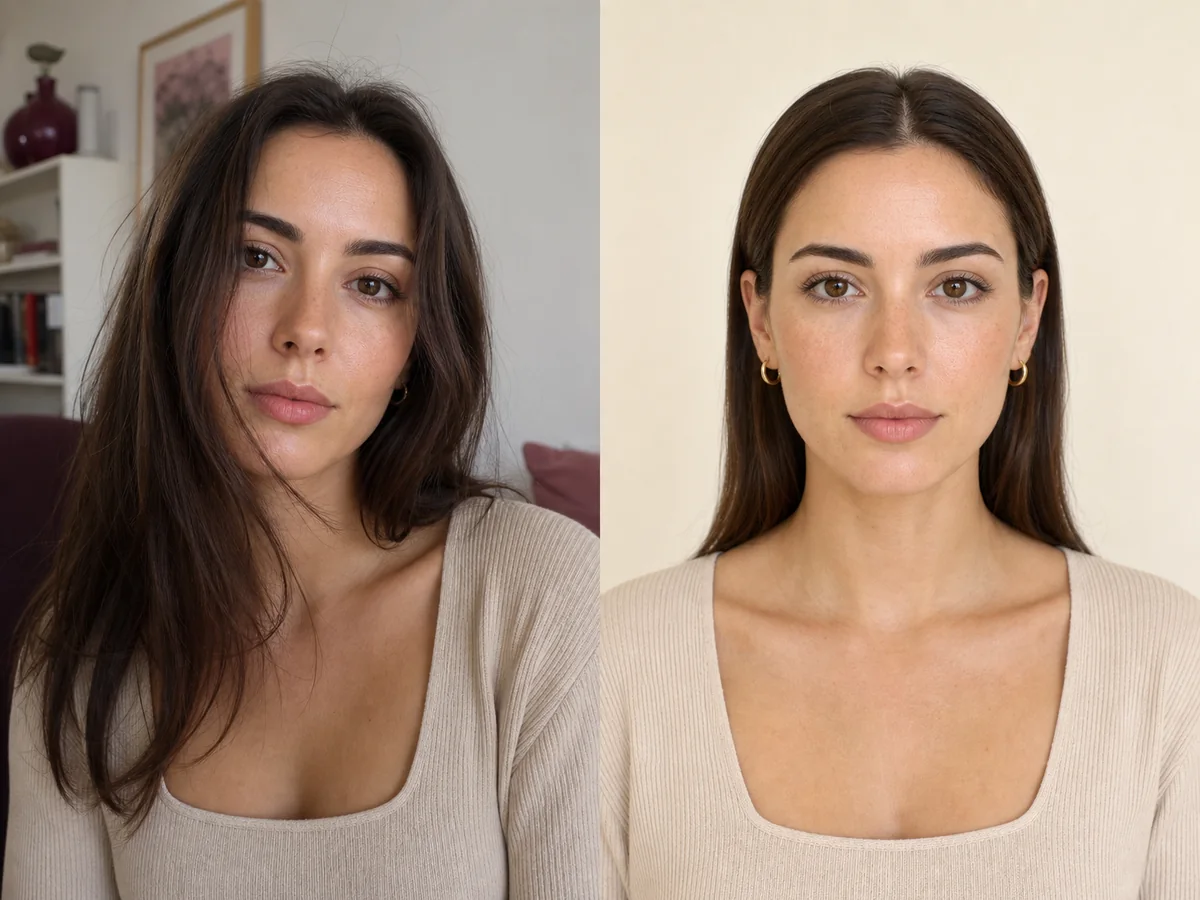
How to Take an AI Hairstyle Photo
The input photo controls how clearly an AI system can understand your face, hairline, current hair, and camera perspective. A simple neutral image usually produces a more useful comparison than a dramatic selfie.
Explore this look →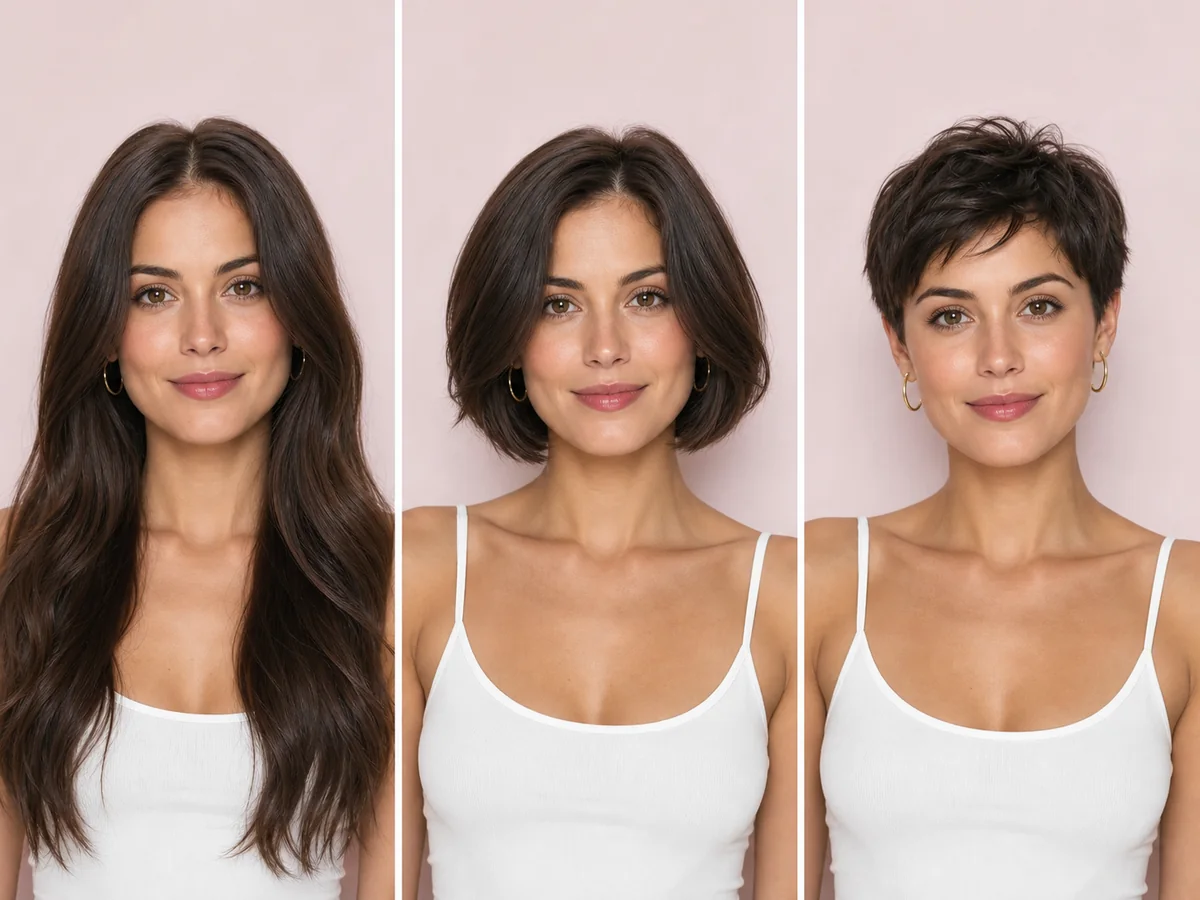
Would I Look Good With Short Hair?
Short hair can suit far more people than rigid face-shape rules suggest. The practical question is which short silhouette matches your features, texture, routine, and willingness to maintain the shape.
Explore this look →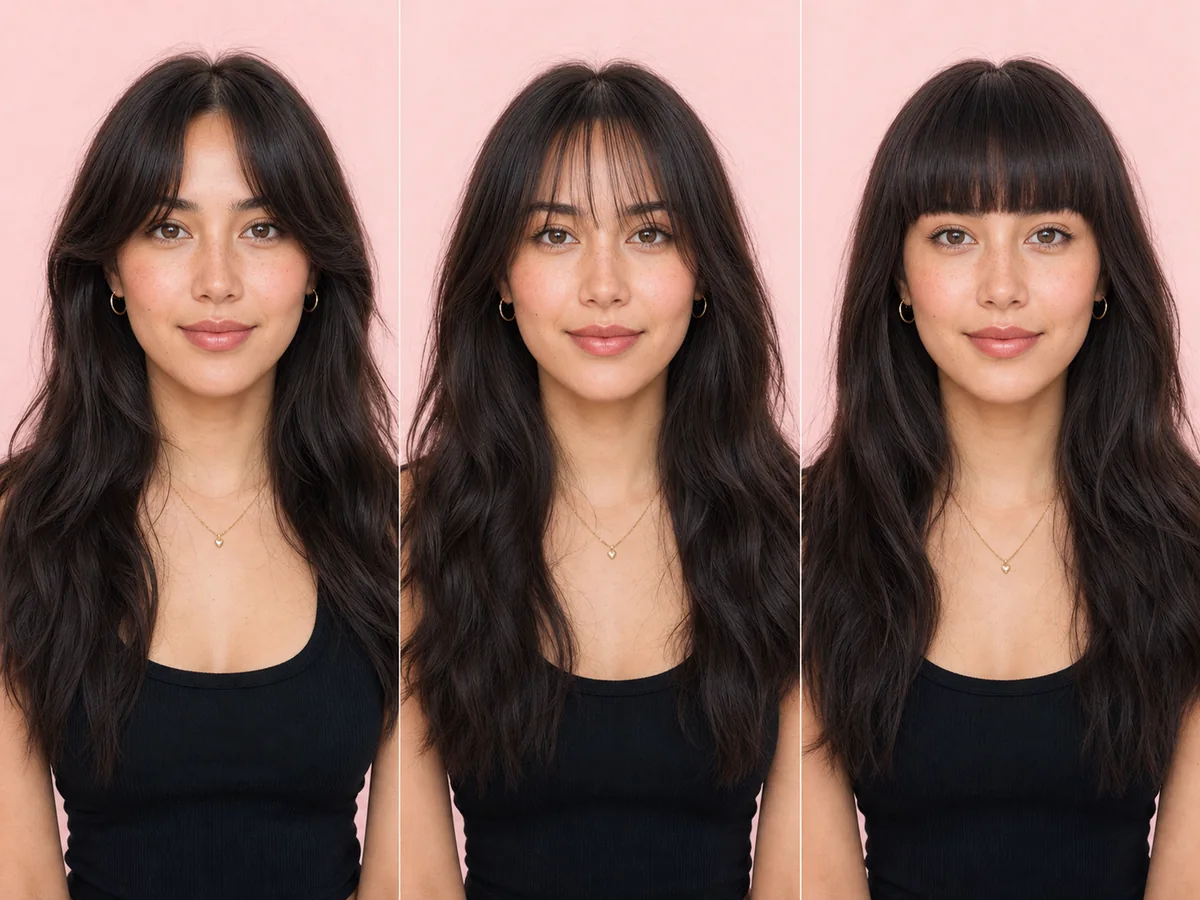
Should I Get Bangs?
Bangs can transform the frame around the eyes and forehead, but “bangs” includes several very different shapes. Preview the density, length, and opening before choosing one.
Explore this look →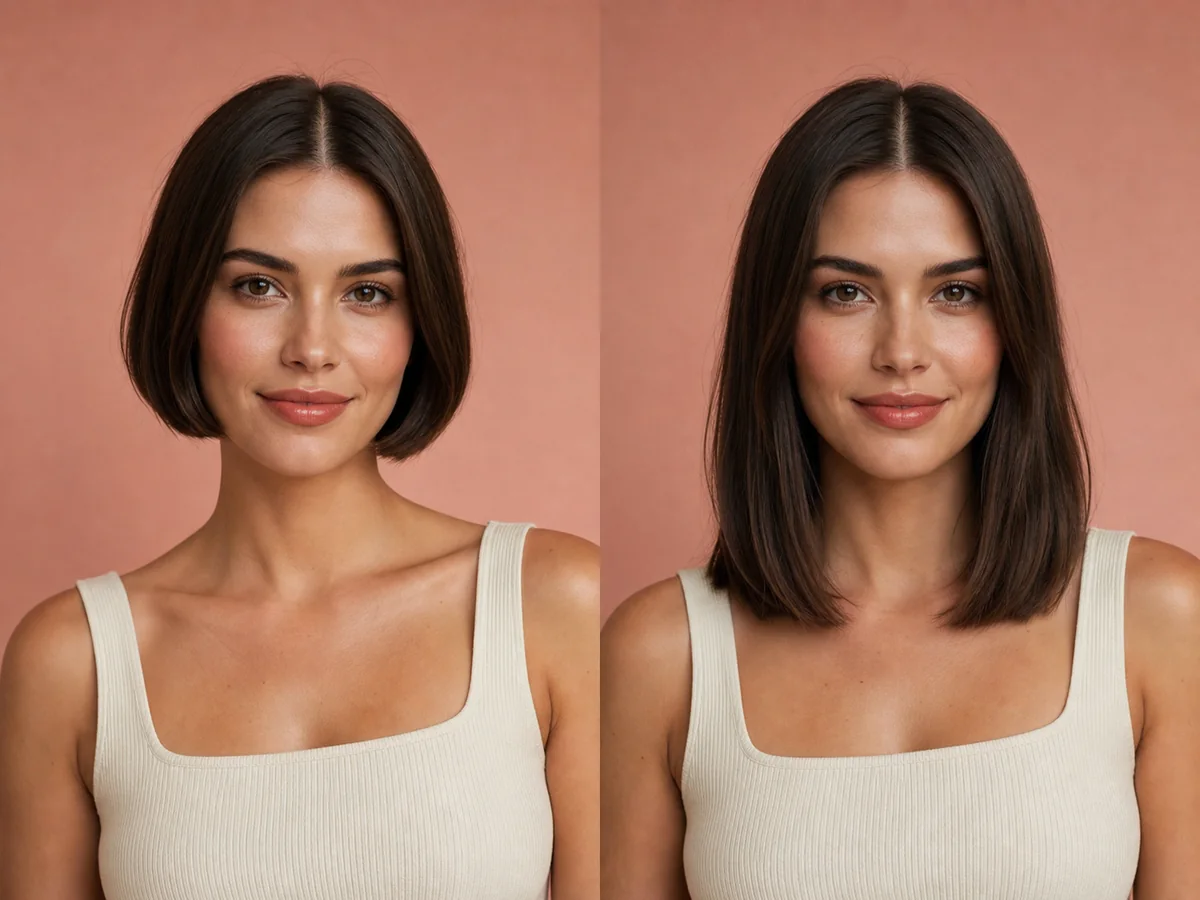
Would a Bob Suit Me?
A bob can be adjusted to almost any personal style, but its length has a strong effect on the jaw, neck, and shoulder line. Preview several reference points instead of judging one generic bob.
Explore this look →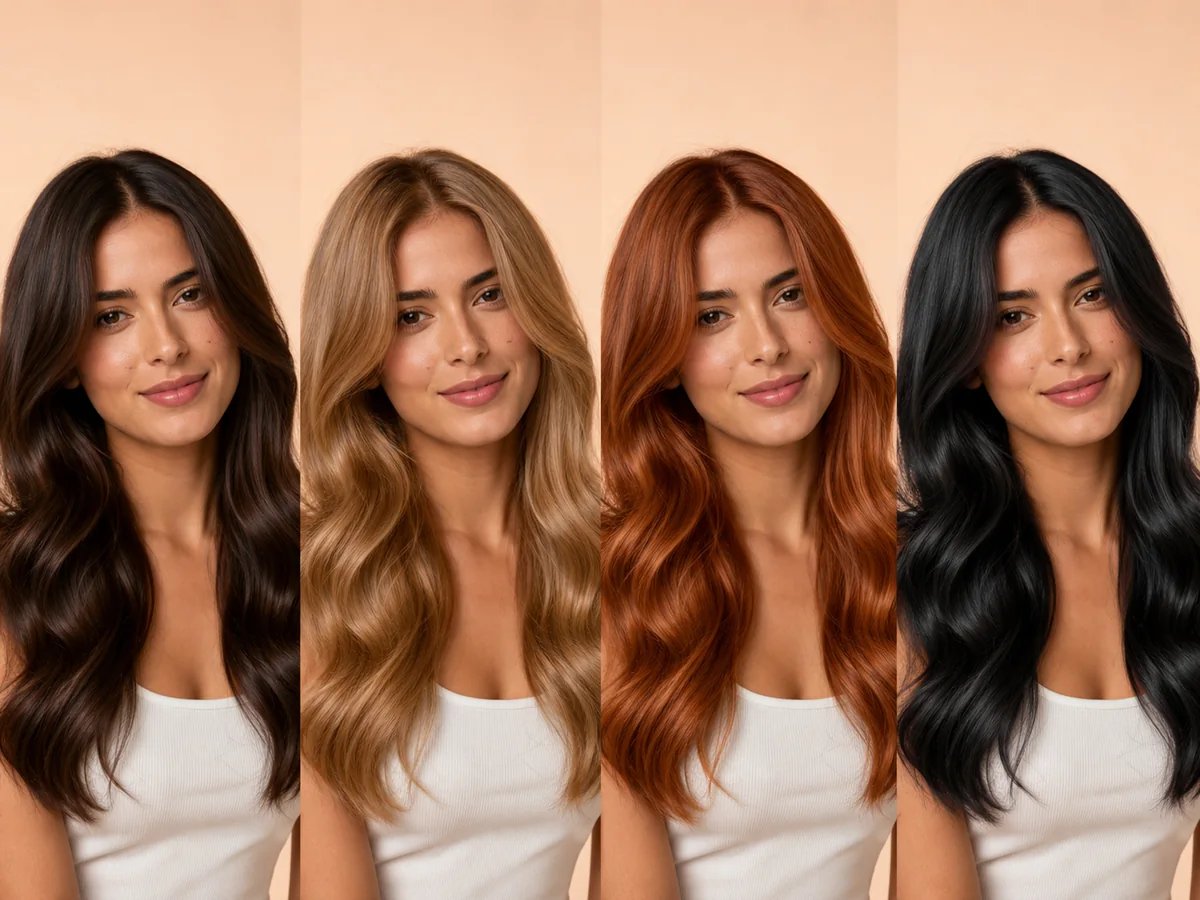
What Hair Color Suits Me?
The most flattering color is not determined by one skin-tone chart. Personal style, contrast preference, eye color, maintenance budget, starting hair, and hair condition all matter.
Explore this look →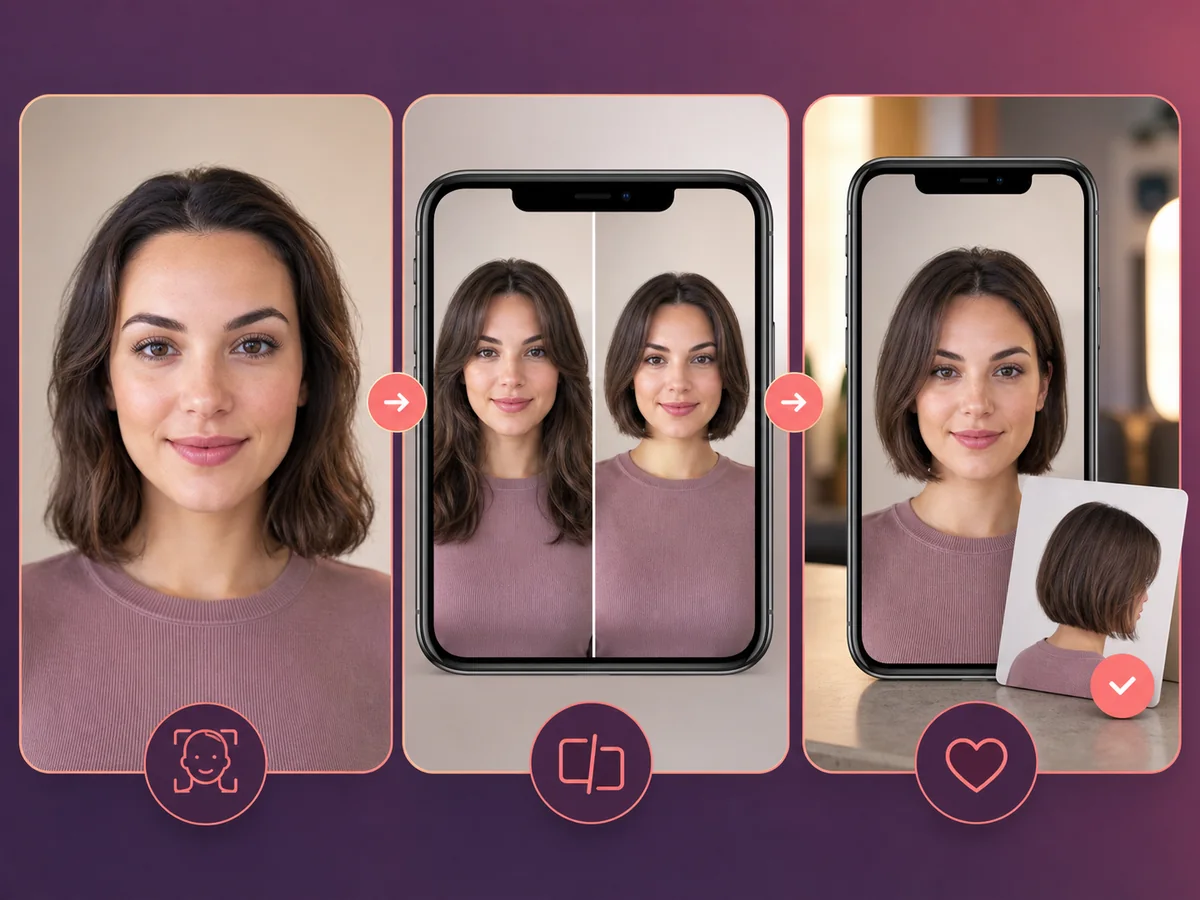
How to Preview a Haircut
A useful haircut preview is more than a novelty filter. It should preserve your recognizable face, show a plausible silhouette, and help you ask better questions during a real consultation.
Explore this look →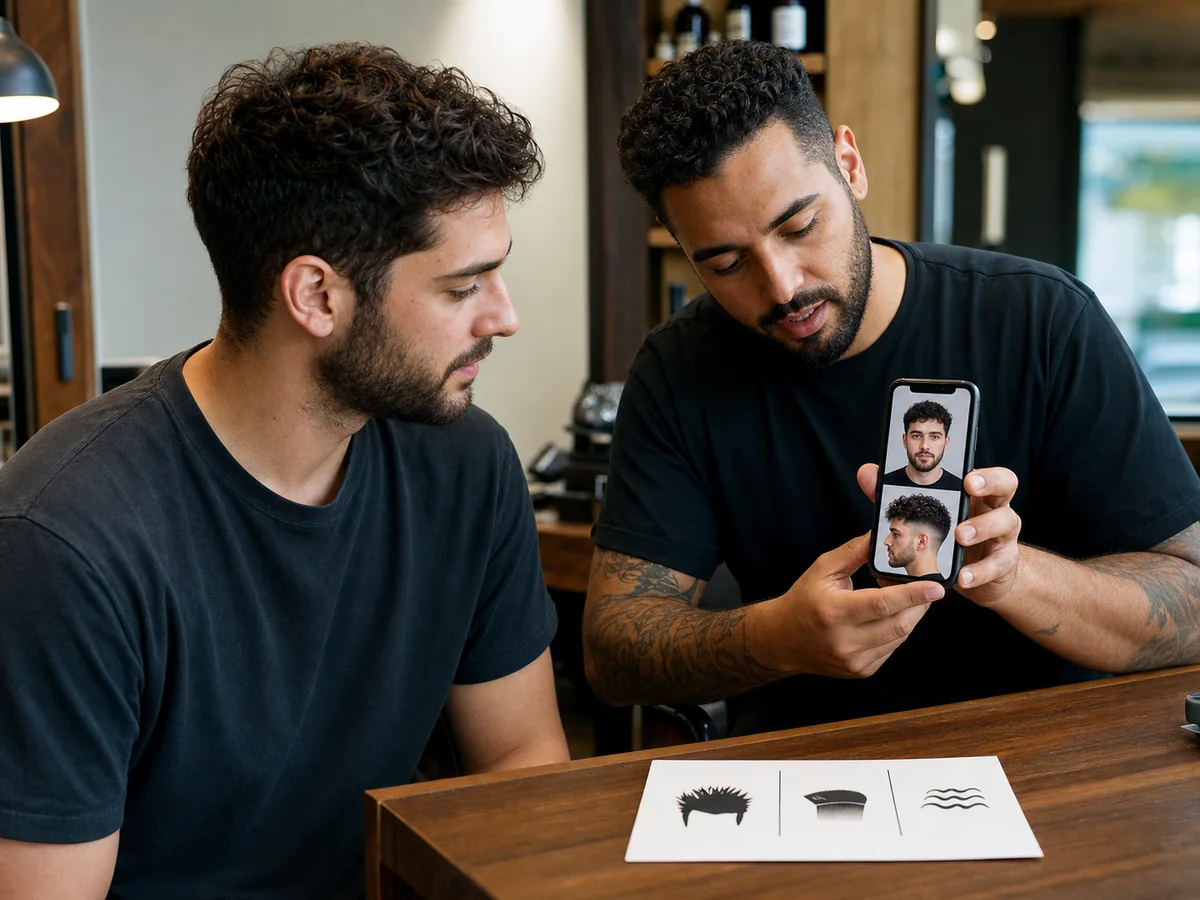
How to Show Your Barber What You Want
A reference image helps most when you can explain the details you want to keep. The barber also needs permission to adapt those details to your density, growth pattern, head shape, and routine.
Explore this look →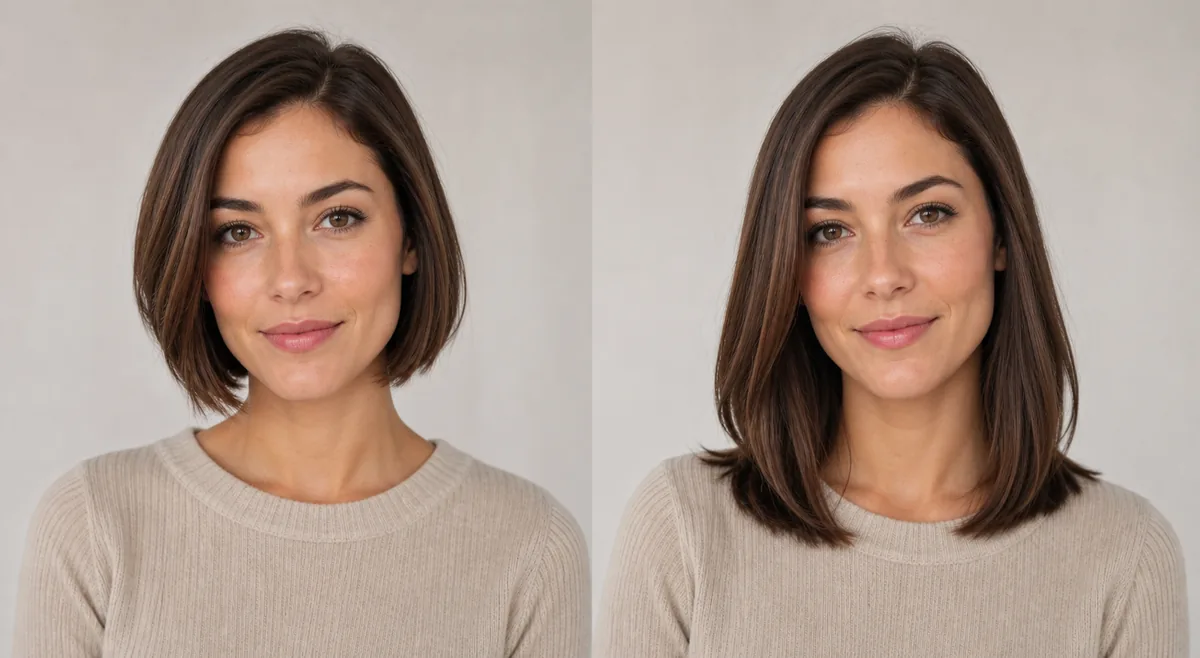
Bob vs Long Bob
A bob usually finishes around the jaw or upper neck; a long bob reaches closer to the collarbone. The shorter line feels sharper and exposes more neck, while the extra length of a lob keeps more tying and styling options.
Explore this look →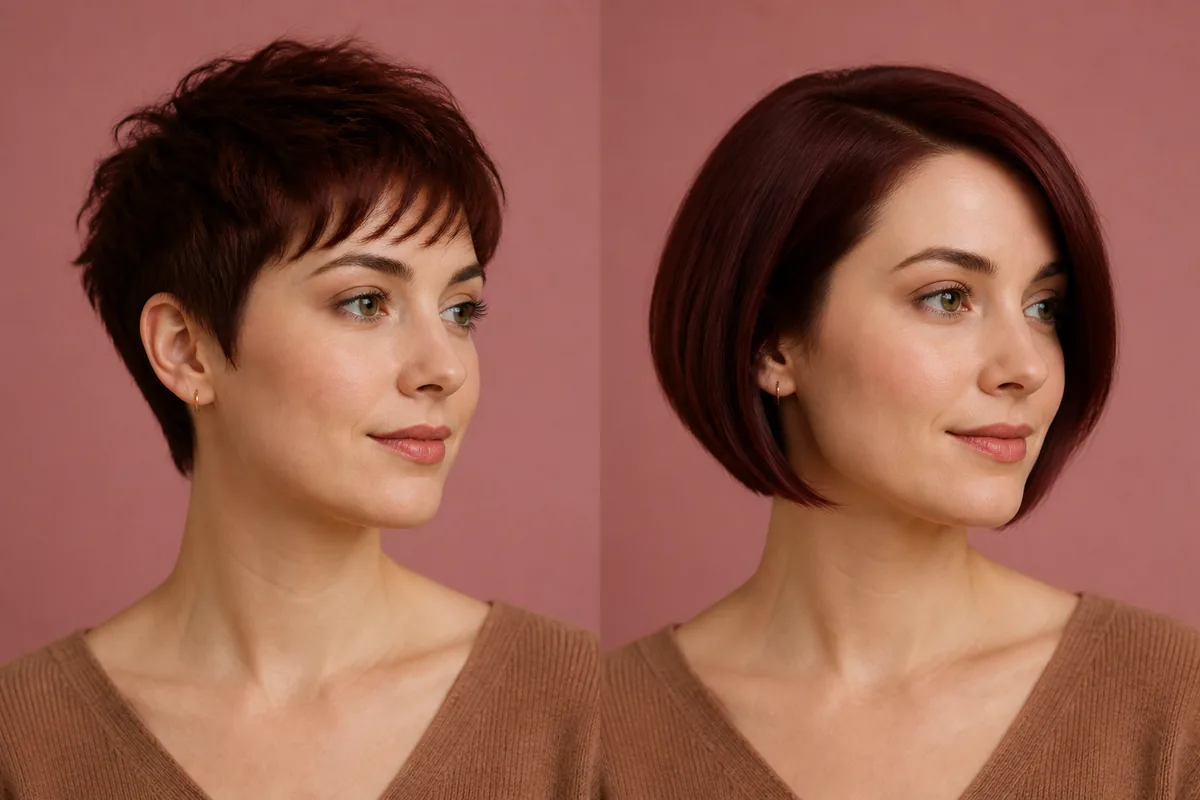
Pixie Cut vs Bob
A pixie exposes the ears and neckline and relies on short sections through the sides and crown. A bob keeps a continuous perimeter around the face. The decision is therefore about structure and coverage, not just removing a few more inches.
Explore this look →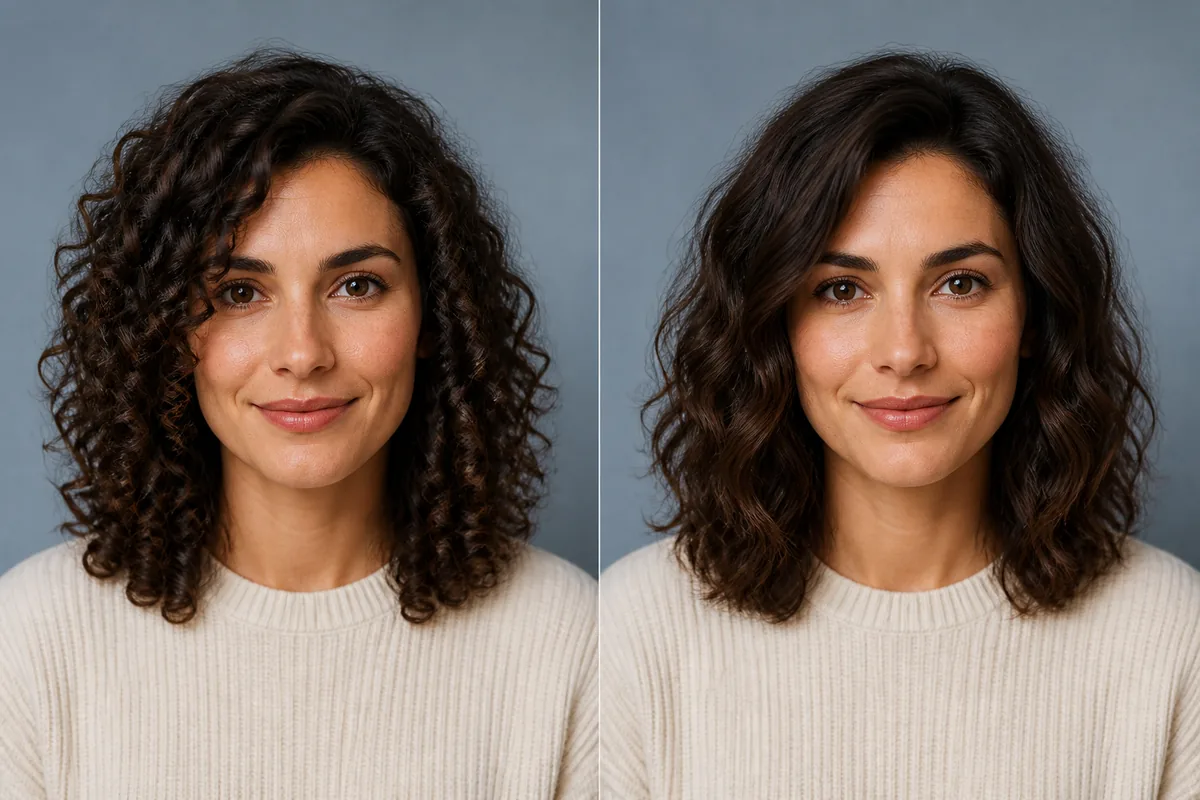
Curly vs Wavy Hair
Curly hair forms visible loops or spirals; wavy hair follows looser S-shaped bends. At the same strand length, curls usually create more apparent shrinkage and concentrated volume, while waves keep more visible length and movement.
Explore this look →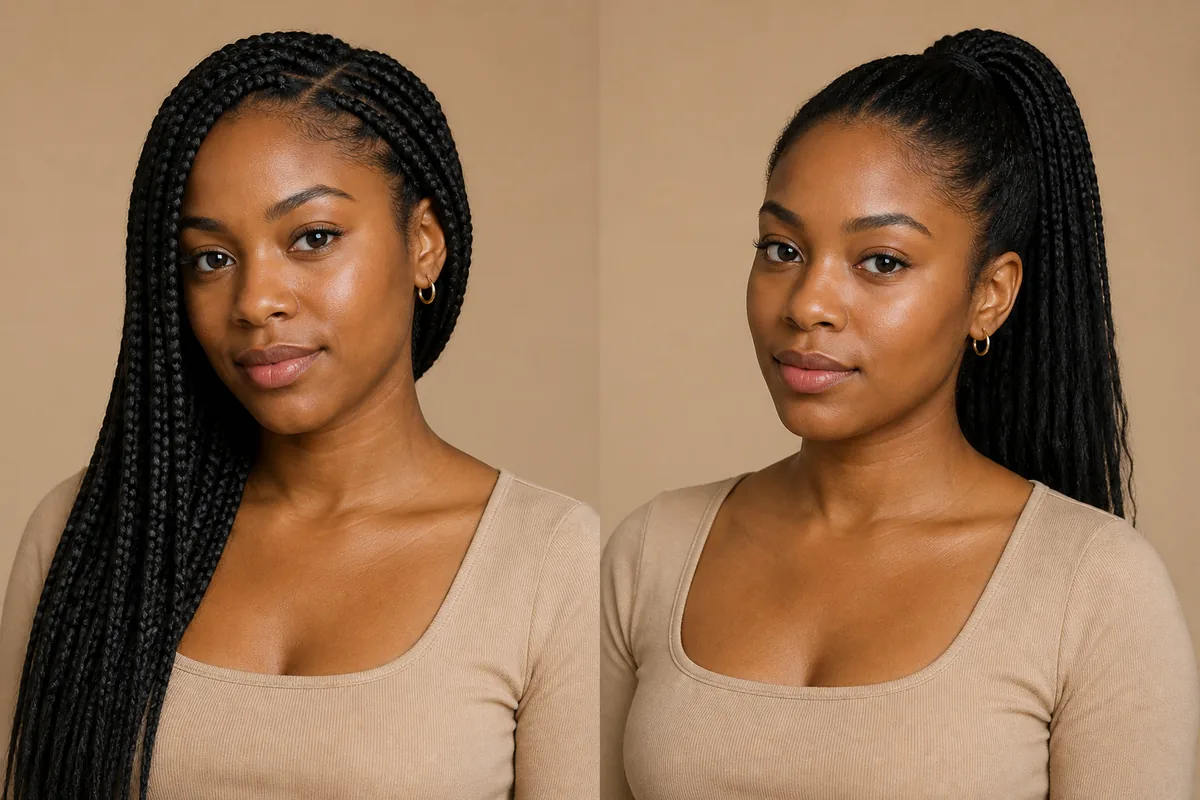
Braids vs Ponytail
Braids can become the complete installed style, while a ponytail describes where loose hair or braids are gathered. The visual comparison is useful, but the practical decision also involves installation time, weight, tension, duration, and how often you want to restyle the hair.
Explore this look →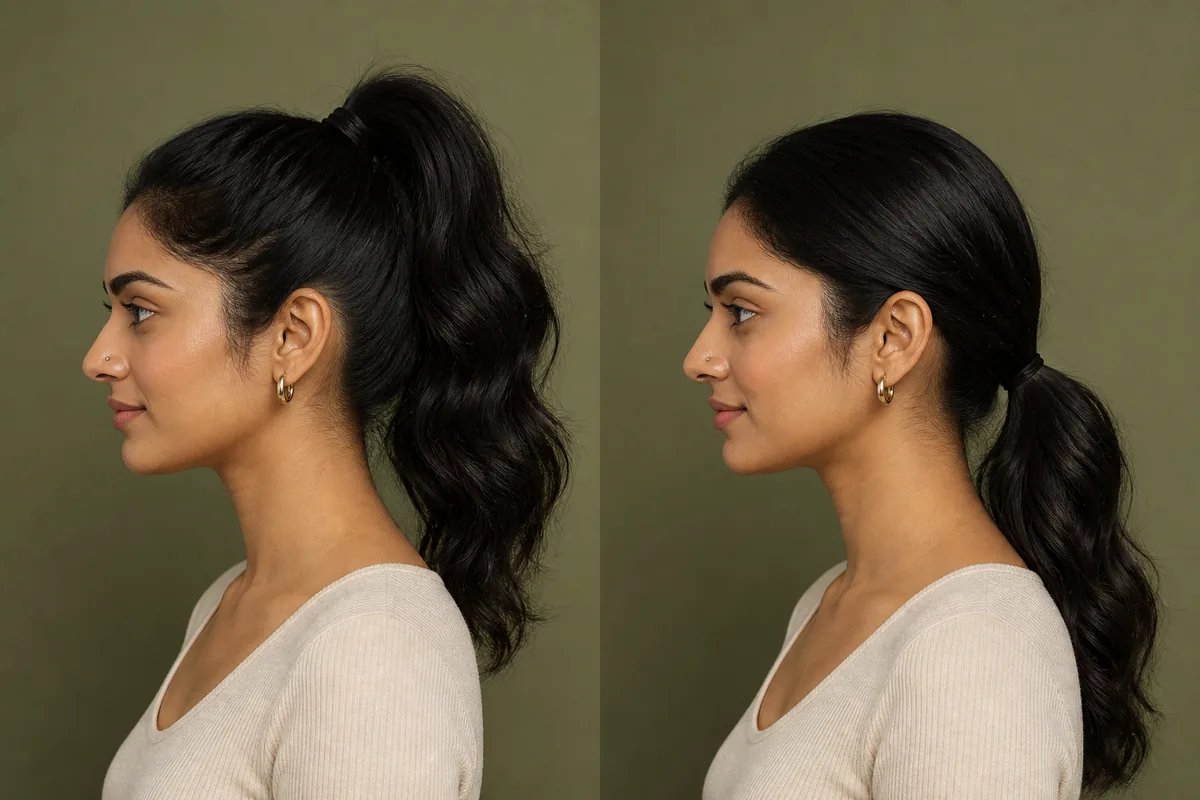
High vs Low Ponytail
A high ponytail places the tie point above the ears and pulls attention toward the crown. A low ponytail sits near the nape, keeps the top calmer, and leaves a longer line behind the neck. The difference is easiest to judge from both front and side views.
Explore this look →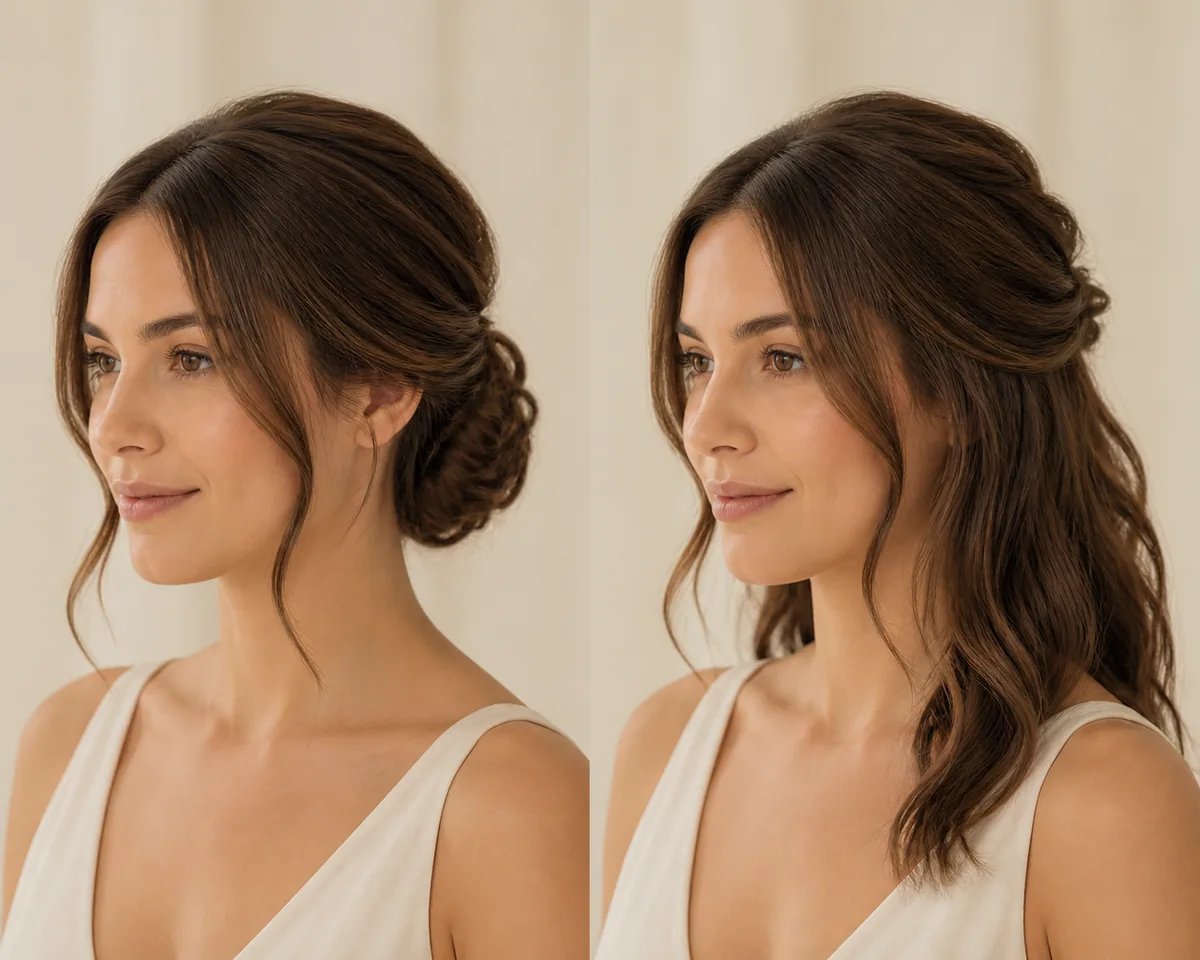
Wedding Updo vs Half-Up Hair
A wedding updo gathers most length away from the neck; a half-up style secures the crown while leaving the lower lengths visible. The choice affects the dress neckline, movement, accessory placement, weather plan, and how much styling remains visible from the front.
Explore this look →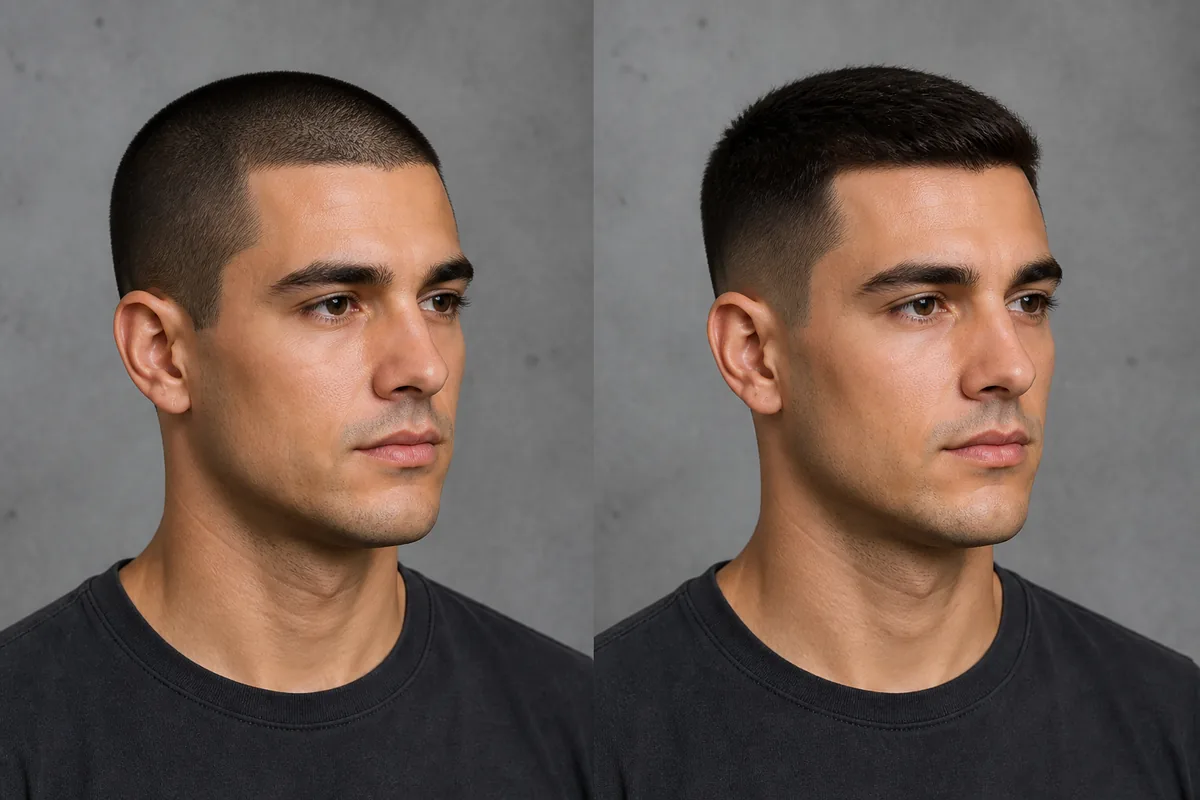
Buzz Cut vs Crew Cut
A buzz cut keeps the hair very short and relatively even; a crew cut leaves enough length on top to create a small directional shape. The crew cut therefore gives more styling control, while the buzz cut makes the head shape and hairline more visible.
Explore this look →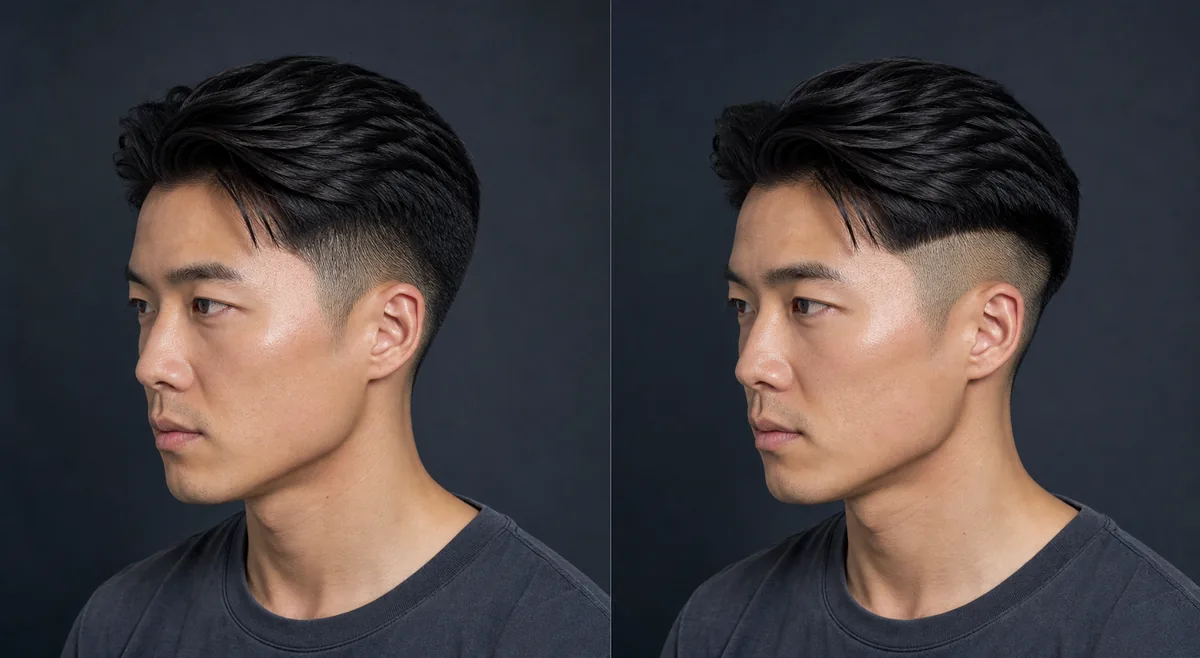
Fade vs Undercut
A fade gradually changes from shorter hair into longer hair; an undercut keeps a stronger break between short sides and a longer top. Either can be worn at different lengths, so the defining decision is the transition rather than one fixed haircut.
Explore this look →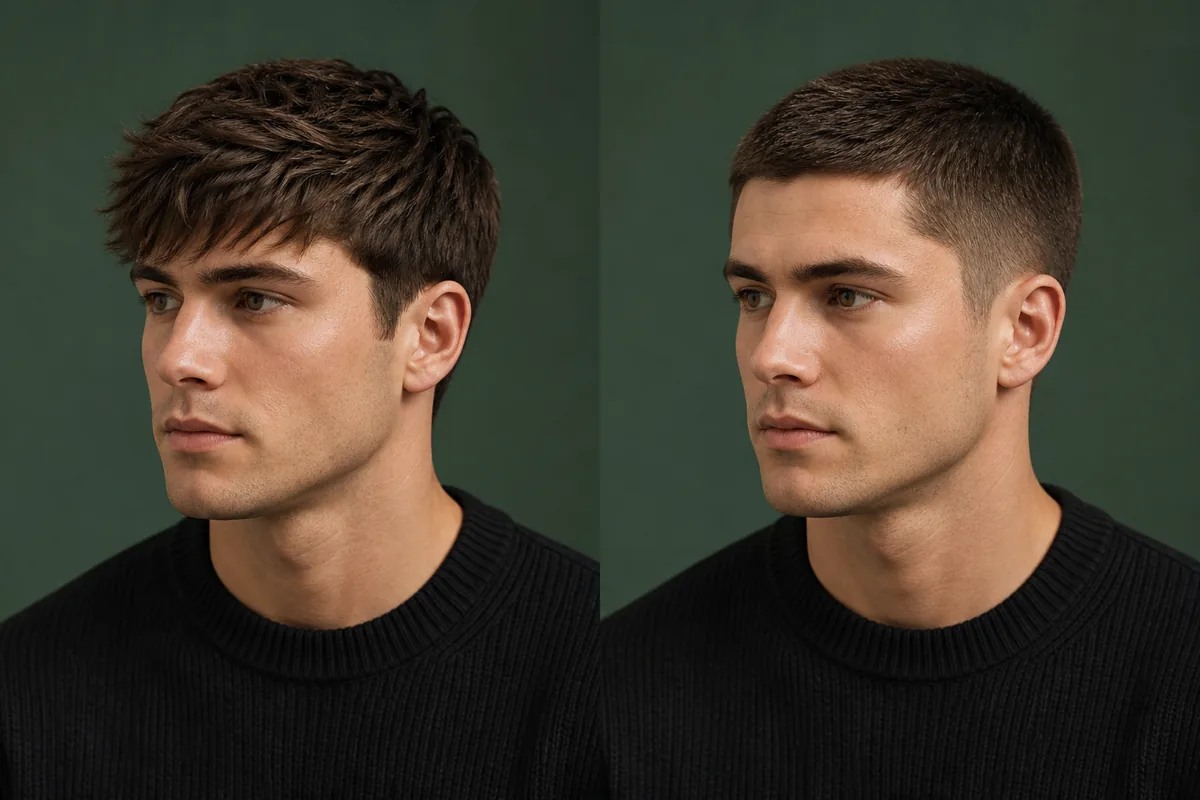
Textured Crop vs Crew Cut
A textured crop usually directs short, separated pieces forward toward the forehead. A crew cut keeps the front more open and gradually leaves extra length toward the top. Their lengths can overlap, but the styling direction creates a different frame.
Explore this look →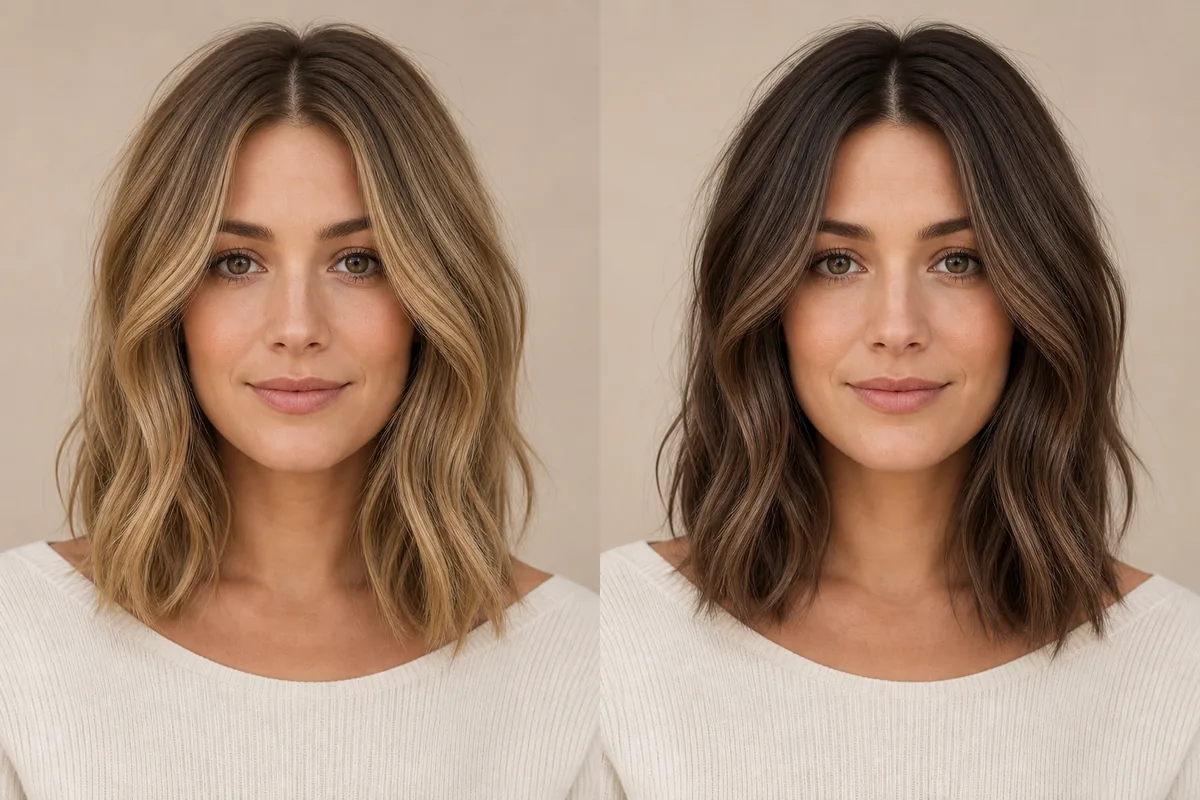
Blonde vs Brunette Hair
Blonde reflects more light and usually lowers the depth around the face; brunette creates a deeper frame and often stronger contrast. Neither family is one shade, so compare similar undertones before deciding whether lightness or depth is the real preference.
Explore this look →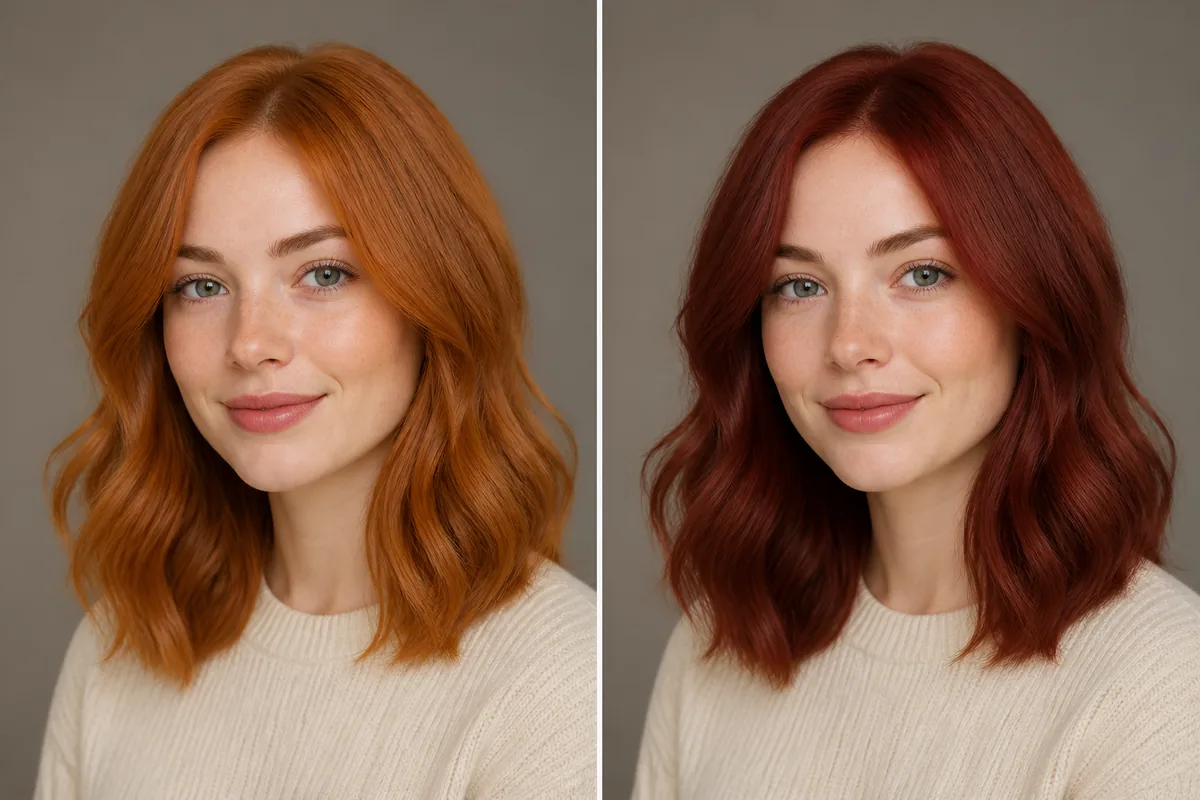
Copper vs Red Hair
Copper leans toward orange and gold; red places more emphasis on true red pigment and can range from bright to deep. At the same depth, copper often looks lighter and more reflective, while red feels richer and more saturated.
Explore this look →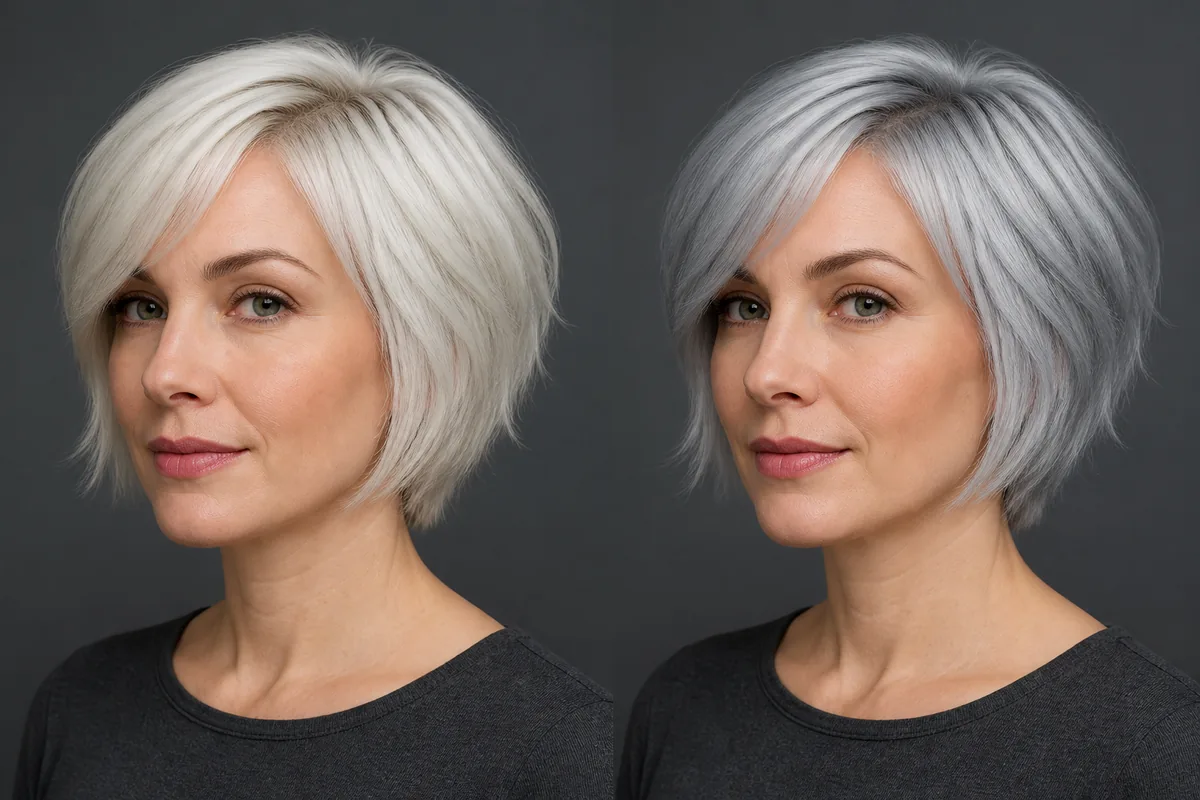
Platinum vs Silver Hair
Platinum is an extremely light blonde with minimal yellow; silver adds a visible gray or metallic cast. Both usually require a very light base, but the finishing toner and maintenance goal are different.
Explore this look →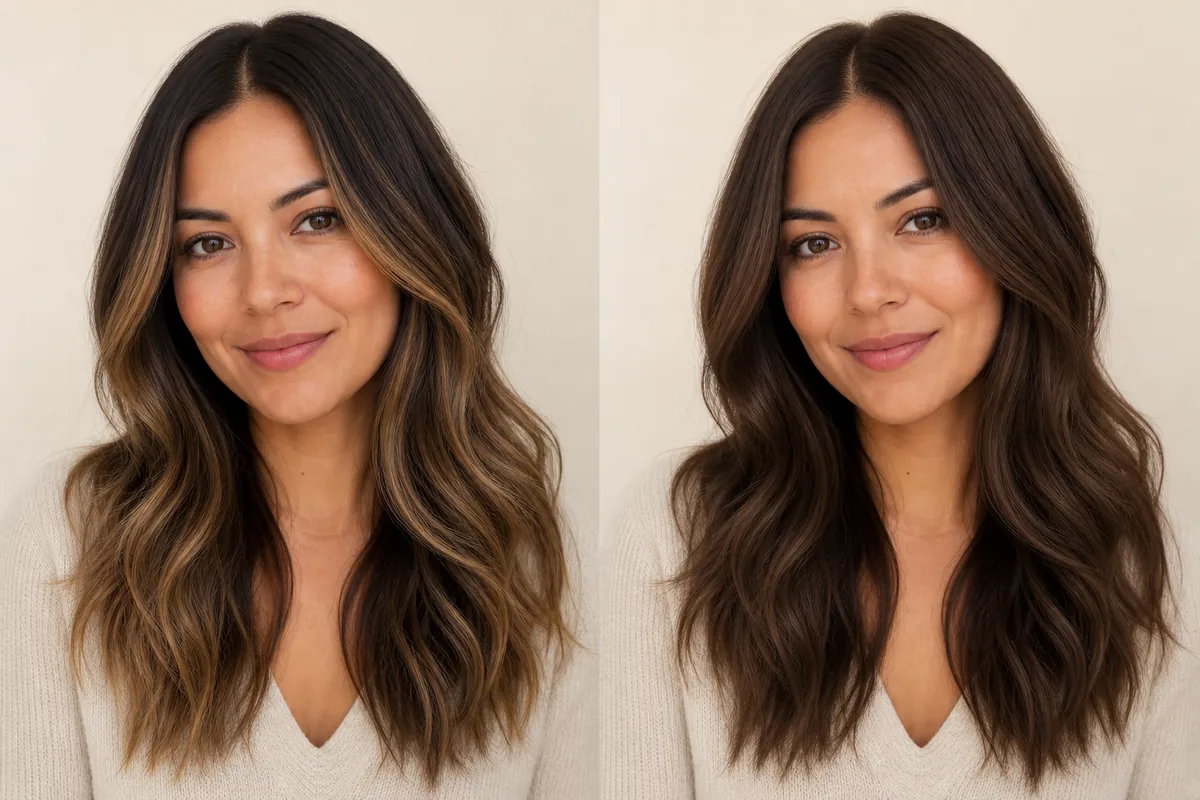
Balayage vs Full Color
Balayage places selected lighter or different-toned pieces through the hair, usually preserving depth at the root. Full color changes the overall field more consistently. The decision is about placement and contrast as much as the chosen shade.
Explore this look →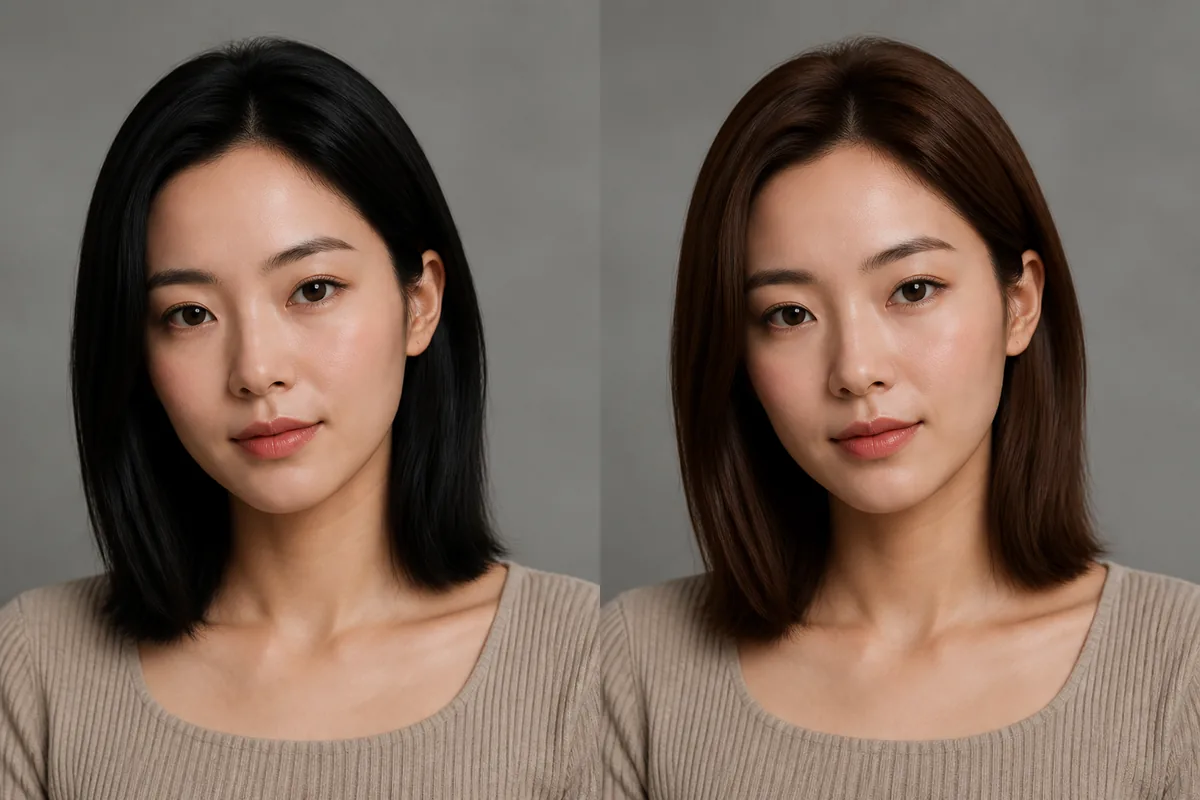
Black vs Brunette Hair
Black hair creates the deepest frame and can read as neutral, cool, or softly warm under light. Brunette preserves more visible brown reflection and a wider range of medium-to-deep levels. The difference can be subtle on screen but strong near the face.
Explore this look →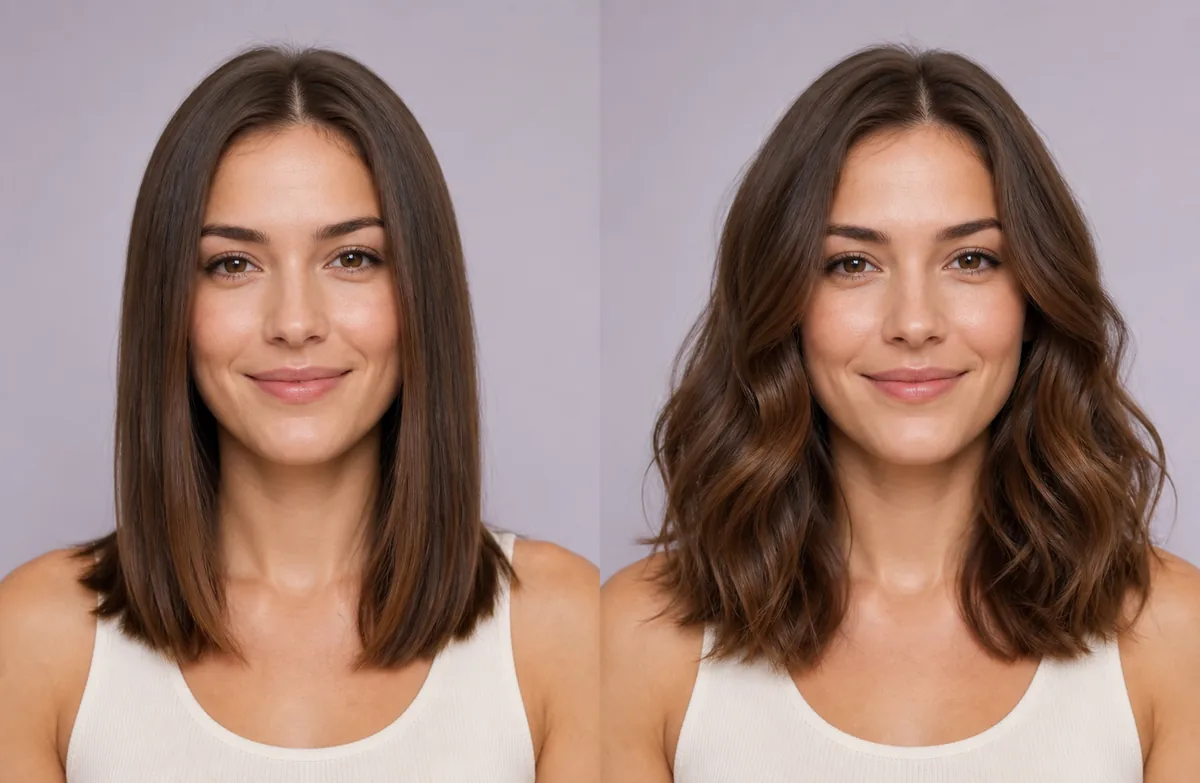
Straight vs Wavy Hair
Straight styling makes the haircut perimeter and length easy to see. Wavy styling adds bends, width, and movement, often making the same measured length appear slightly shorter. Compare them without changing the cut or parting.
Explore this look →Ready to see the change on your own face?
Open Glowify on Android, choose a clear photo, and compare hairstyles or colors before making the real change.